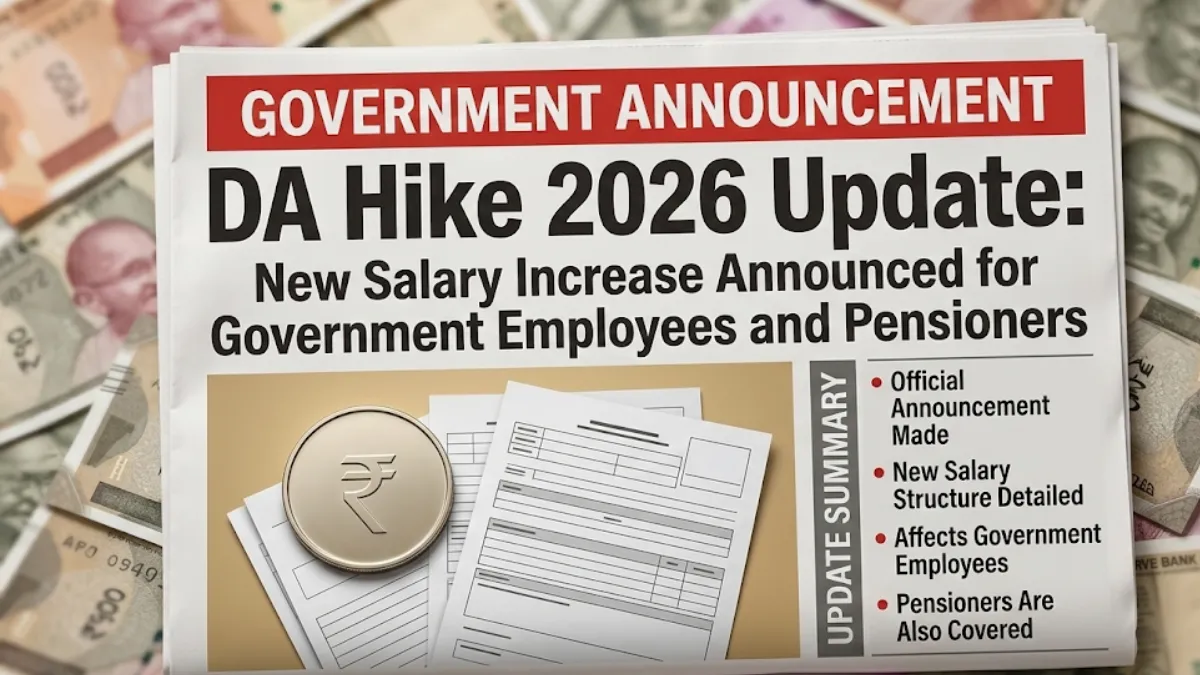
The latest Dearness Allowance update for 2026 has become an important topic for government employees and pensioners who depend on regular salary revisions to manage rising living costs. With inflation affecting daily expenses such as food, fuel, housing, and healthcare, periodic DA hikes play a crucial role in protecting the purchasing power of salaried workers and retirees. The new increase is expected to bring a noticeable boost to monthly income for millions of employees and pension beneficiaries, making it one of the most discussed financial updates this year.
Overview of the DA Hike 2026
Dearness Allowance, commonly known as DA, is a cost-of-living adjustment provided to government employees and pensioners. It is designed to offset the impact of inflation and ensure that salaries remain adequate despite rising prices in the economy.
In 2026, authorities have reviewed inflation data and economic indicators to revise the DA rate. This adjustment is usually calculated based on consumer price index trends, which reflect changes in the cost of essential goods and services. When the index rises, the DA percentage is increased to help employees maintain their purchasing power.
The revised DA will be applied to basic pay and pension, which means that both active employees and retired pensioners will benefit from the updated rate.
Key Highlights of the DA Hike
• Revised DA rate expected to increase overall monthly salary and pension income
• Adjustment calculated using inflation and consumer price index data
• Benefit applies to both government employees and pensioners
• Revised amount added to basic salary or pension payments
• Increase implemented through regular salary and pension processing systems
Important Timeline for the 2026 DA Revision
Dearness Allowance adjustments are usually announced periodically during the year after reviewing inflation trends and economic conditions. The 2026 update follows the same process and is expected to be implemented through official payroll systems.
| Component | Details |
|---|---|
| DA Revision Year | 2026 |
| Beneficiaries | Government employees and pensioners |
| Basis for Calculation | Inflation and consumer price index |
| Payment Method | Added to monthly salary or pension |
| Implementation | Through payroll and pension systems |
These adjustments ensure that compensation remains aligned with the changing cost of living.
Eligibility Criteria and Who Is Affected
The DA hike mainly affects employees working in government departments and organizations that follow the official salary structure. Pensioners who receive retirement benefits under the same pay structure are also eligible for the revised allowance.
Employees working in certain public sector institutions or government-supported organizations may also receive the revised DA depending on their pay policies. The allowance is usually calculated as a percentage of the employee’s basic salary or the pensioner’s basic pension.
Because DA is tied to salary structure, individuals working in private organizations may not automatically receive this benefit unless their employer follows a similar cost-of-living adjustment system.
Key Benefits of the Salary Increase
The DA hike brings several financial advantages to employees and retirees. Since the allowance is linked to the basic salary, even a small percentage increase can create a noticeable improvement in overall monthly income.
For pensioners, the revised DA provides additional financial support after retirement, helping them manage medical costs, household expenses, and other essential needs.
The adjustment also plays an important role in protecting income against inflation. As the cost of living rises over time, periodic DA increases help maintain a stable standard of living for workers and retirees.
How the DA Increase Works in Salary and Pension Payments
The Dearness Allowance is calculated as a percentage of the basic pay for employees and the basic pension for retirees. Once a DA hike is announced, payroll systems automatically update the revised percentage.
After implementation, the increased amount appears as a separate component in salary slips or pension statements. In many cases, employees may also receive arrears if the revised DA is applied from a previous date.
The process usually does not require employees or pensioners to submit any separate application because the change is implemented through the existing salary and pension system.
Possible Delays or Administrative Challenges
Although DA hikes are typically implemented smoothly, some delays may occur due to administrative processing or verification procedures. For example, departments may need time to update payroll software, verify employee records, and apply the revised calculations.
In some cases, arrears may take additional time to process if the increase is applied retroactively. Pensioners whose records are managed by different pension authorities may also experience minor processing delays.
However, once the system updates are completed, payments usually return to the normal schedule with the revised allowance included.
How Employees and Pensioners Can Ensure They Receive the Updated DA
Most employees and pensioners do not need to submit a separate request for the DA increase because it is applied automatically by the payroll system. However, individuals should regularly check their salary slips or pension statements to confirm that the updated allowance has been applied correctly.
If there are discrepancies, the employee or pensioner can contact the relevant payroll office or pension authority for clarification. Keeping personal records updated and verifying salary details can help prevent errors during the implementation process.
Latest Updates and Expected Changes
Authorities periodically review economic indicators to determine whether additional DA revisions are necessary. Future increases may occur if inflation continues to rise or if economic conditions change significantly.
There are also ongoing discussions about broader salary revisions through future pay commission reviews. These reviews may lead to larger adjustments in salary structures and allowances in the coming years.
Employees and pensioners are therefore encouraged to stay informed about official announcements regarding DA revisions and pay structure updates.
Conclusion
The DA Hike 2026 brings welcome financial relief for government employees and pensioners by increasing their monthly income to better match rising living costs. By adjusting salaries and pensions based on inflation, the allowance helps maintain financial stability for millions of households. Since the revised DA is usually applied automatically through payroll systems, beneficiaries should simply monitor their salary or pension statements to ensure that the updated amount has been included.
Disclaimer
This article is for informational purposes only. DA rates, implementation dates, and eligibility conditions may change based on official announcements.